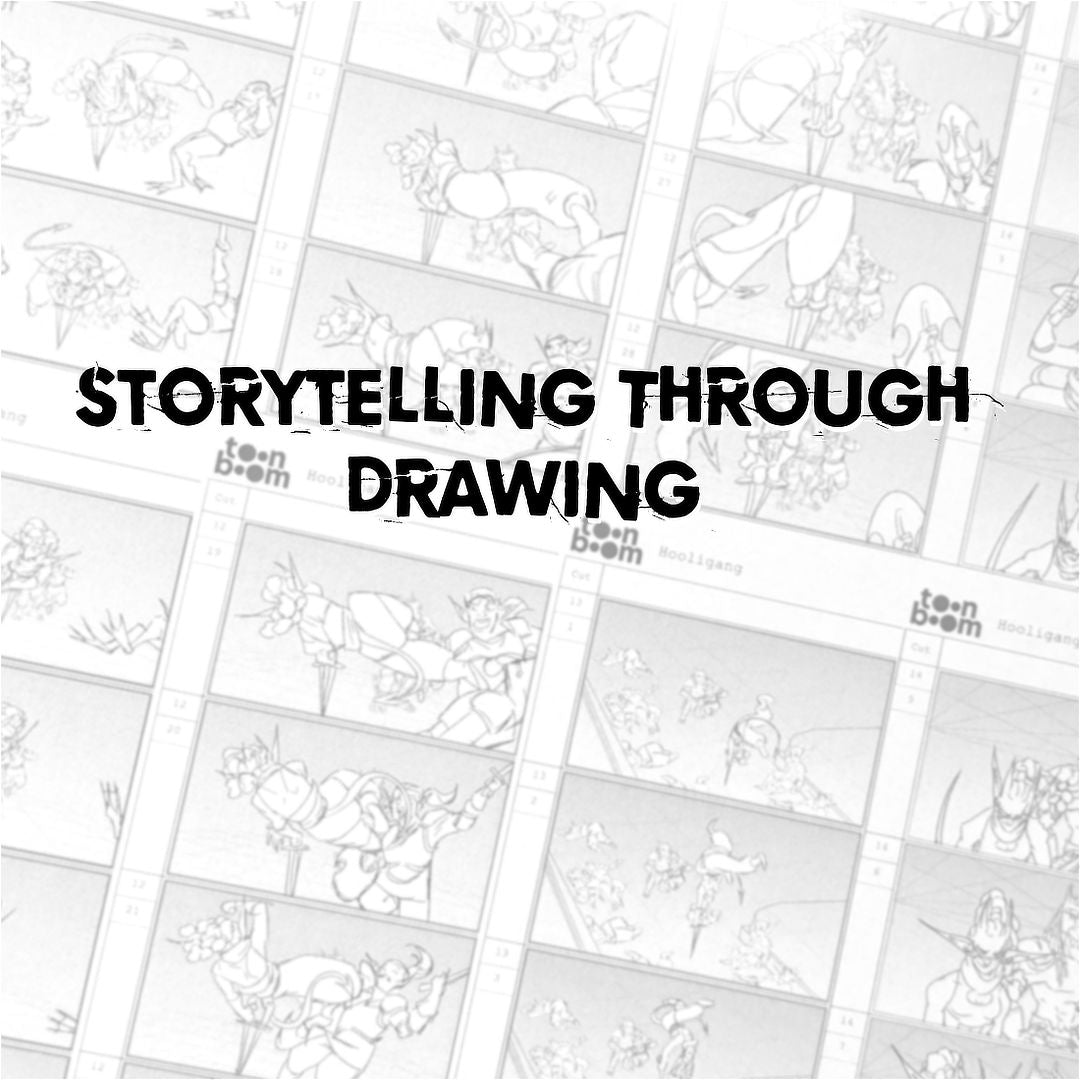
A beautiful drawing doesn't always tell a compelling story, but a simple sketch with strong storytelling can captivate an audience. In this course, you will learn how filmmakers, comic artists, storyboard artists, and animators use composition, camera placement, acting, and sequencing to guide the viewer's eye and create emotional impact.
Rather than focusing on polished artwork, you will discover how to communicate ideas visually and build scenes that feel cinematic. Working step-by-step from initial script to finished production boards, you will learn to direct scenes, choose dynamic camera shots, and bring characters to life on the page.
About Your Instructor
Emily Steckly is an animator, tattoo artist, educator and skateboarder who likes bold work, good stories and projects with a lot of momentum behind them.
Learn more about Emily
Course Rundown
Week 1: Building the Story
Develop your characters, define your core theme, and master narrative frameworks like the Story Circle. Learn the fundamentals of scriptwriting and flesh out character sheets as you draft your first 2-page short script.
Week 2: Directing the Scene
Learn the spatial geography of a scene before drawing individual shots. Understand blocking, staging, and the 180-degree rule to keep audiences oriented while mapping out character movements and interactions.
Week 3: Thinking in Pictures
Explore fast thumbnailing techniques to rapidly capture visual ideas. Analyze cinematic scenes from film and animation to understand shot mechanics and why specific visual choices succeed.
Week 4: Creating Visual Questions
Discover how shot sequencing builds tension, asks visual questions, and maintains audience curiosity. Begin thumbnailing your storyboard in sequential order, ensuring every frame connects seamlessly to the next.
Week 5: Choosing the Right Camera Shot
Understand when and why to deploy establishing shots, mid-shots, and close-ups. Analyze camera angles to communicate emotion and shape narrative tone during individual board reviews.
Week 6: Strengthening Every Frame
Elevate individual panels with strategic background design, camera placement, and environmental storytelling that heighten the viewing experience and support your narrative goals.
Week 7: Acting on the Page
Explore how gesture, body language, staging, and clear posing convey character emotion and intention long before dialogue is spoken, refining key story moments on the page.
Week 8: Final Polish & Story Review
Bring your sequence together in a collaborative workshop focused on refinement. Identify weak shots, strengthen narrative flow, and present your polished storyboard sequence to the class.
By The End Of This Course, You Will:
- Develop an original visual story from initial script to complete storyboard.
- Learn how directors use composition, staging, and camera placement to guide an audience.
- Understand cinematic principles such as the 180-degree rule, shot selection, and visual continuity.
- Create effective thumbnail sketches and production-ready storyboards.
- Learn how character acting, posing, and body language strengthen visual storytelling.
- Build confidence communicating ideas through drawing without needing highly polished artwork.
- Leave with a completed storyboard sequence that demonstrates your visual storytelling skills.
What To Bring & Requirements
-
Drawing Materials: A sketchbook and your choice of drawing tools (pencils, fineliners, or a digital drawing tablet/laptop).
-
Planning Essentials: A notebook and pen for scriptwriting and mapping out scene geography.
-
Skill Level: No advanced drawing background required. The focus is entirely on visual communication and ideas.
Event Details
-
Location: Urban Art Collective Art Hub, 50 Bayswater Avenue, Ottawa
-
Instructor: Emily Steckly
-
Level: All Levels
-
Maximum Capacity: 12 students
-
Minimum Enrolment: 6 students required